Friday, May 7, 2010
Unity among Charismatics / Non-Charismatics
Dave Bish has a good post on how those with a different view of the Spirit's work can work in gospel partnership on campus.


Friday, April 30, 2010
Great quote from David Wells, "The Emperor's Lost Clothes"

David Wells, No Place for Truth, 84.
Friday, February 12, 2010
Psalms are songs with different moods.
As well as seeing different ways in which the Psalms point to Christ, it is helpful to see that the Psalms reflect the whole spectrum of human experience.
Belcher's analysis can be broken down into several different kinds of prayer/song.
This is useful in reflecting upon Christ, as the Psalms were His hymnbook. Much is gained when we reflect upon how each Psalm would resonate upon the lips of Jesus. Through Christ it is also pastorally useful to us as we pour out our hearts to the Lord.
This is the usual list of different kinds of Psalms. For a chart breaking each of the Psalms in their different categories see here.
1. Lament
a. Penetential
b. Imprecatory
2. Thanksgiving
a. Salvation history
b. Songs of Trust
3. Praise
4. Liturgy
a. Royal Psalms
b. Covenant Psalms
c. Songs of Zion
d. Temple Liturgy
5. Wisdom Psalms
6. Poems of the Law
This is so useful to know, not just so that we can understand the Psalms, but so that we can know who God is, who Jesus is and how we are to relate to God through Jesus.
That's going to be the outline to the sermon, I think...
Where is my hope? (Psalms is a a book about the coming of Christ)
Who is my God? (Psalms is a book about the character of God)
Who am I? (Psalms is a book written to help us speak to God)
Thursday, February 11, 2010
There are 150 Messianic Psalms

The point of his book it to help us to think how all the Psalms are fulfilled in Christ.
He has 5 categories of how Psalms are about Jesus.
1) Psalms of orientation
"Psalms of orientation emphasize that life is oriented towards God and a person is experiencing seasons of well-being that evoke gratitude for the constancy of God's blessing" (44)
2) Psalms of disorientation
"Psalms of disorientation deal with seasons of hurt, alienation, suffering, and death. Life seems chaotic and in painful disarray." (67)
3) Psalms of reorientation
"[Psalms of New Orientation] express thanksgiving for the faithfulness and deliverance of God through a difficult time of crisis and despair so that joy and blessing are a part of life again." (99)
4) Royal Psalms
"The common thread in the royal psalms is kingship. Many royal psalms refer specifically to 'the king' (2,18,20,21,45,72,89), or sometimes to the king as the 'annointed' (2, 18, 20, 45, 89, 132)." (118)
5) Directly Messianic Psalms
"They speak more directly of the Messiah and his work and are used in the New Testament in this way." (157)
Having laid out these different approaches to the Psalms, Belcher then expands the different ways in which Christ will then be preached from each of these different categories. Very helpful book!
Wednesday, February 10, 2010
Psalms is a book
There are 66 books in the bible, unless you understand the Minor Prophets to be one book rather than twelve, in which case there are only 55, or if you understand Psalms to be five books rather than one, in which case there are 70.
But, let's stick with 66. One of those books is Psalms. I'm planning to preach a sermon on Psalms this week, having preached on Job last week.
We tend to think of Psalms as a collection of songs that reflect the different experiences of David and others. It is certainly that; but it is not a random collection. Those songs have been crafted into a book with a coherent message.
We tend to think of Psalms as being primarily about David; he is certainly in focus. But we must also recognise that Psalms is a post-exilic book. The focus is on David, because he is the model of the Messiah to come. Those who had returned from the exile and had not seen all the promises made to David come true. The return from exile has not marked the coming of the Messiah.
Psalms holds out an enduring Messianic hope to a post-exilic people. There is yet a rest to come.
Tuesday, January 26, 2010

Tuesday, December 22, 2009
Thursday, December 17, 2009
Jesus is Israel, Herod is Pharoah, Israel is Egypt.

 It is recognised by everybody that "Out of Egypt I called my Son" (Matthew 2:15, quoting Hosea 11:1) has been one of the harder fulfilment passages Matthew's gospel. It is hard for several reasons.
1) Hosea 11:1 seems to be recalling a past event rather than anticipating a future event. This is noted by all the commentators. We misunderstand Matthew's use of "fulfilment" if we think that it means that it is a fulfilment of a predictive prophecy. Jesus is Israel. In being the seed in whom all the promises to Israel would be fulfilled, even the events of his life mirror the history of Israel. e.g. Blomberg, 67, "This is the first of several instances in Matthew in which Jesus recapitulates the role of Israel as a whole".
National Israel anticipated the life of the true vine, in whom the hopes and fear of all the years are met.
2) Matthew states that hosea 11:1 is fulfilled straight after he has recounted the journey of Jesus, joseph and Mary into Egypt, not out of it.
The majority of commentators (eg. Caron, Blomberg, Calvin, Nolland) suggest that it is put here rather than when he actually comes out of Egypt for structural reasons. Three scenes in 2:13-23 each fulfil one Old Testament allusion.
However, there is another possible (and I think probable) explanation. I first heard of it in a conversation with Michael Lawrence. I'd not arrived at Capitol Hill Baptist Church by the time he was at that point in his bible studies through Matthew's gospel. However, he explained to me how it makes perfect sense to see "Out of Egypt have I called my Son" to refer to Jesus' journey from Israel to Egpyt rather than the return journey.
Herod acts like Pharoah, even killing baby boys. Infanticide was seen as the most horrific of social crimes in the Old Testament. It is from such an Egypt that the Lord brought his son Israel in the Exodus.
Once you see this, there are all kinds of other parallels between the Exodus story and the flight to Egpyt that one sees. They flee at night (Exodus 12:8,12,29,30,31, 42) at the direct command of the Lord (Exodus 12:31). Both passages have the death of God's enemies front and centre: the one who seeks the death of God's people will die. In Exodus, there is no house without a dead son. In Matthew, the death of Herod himself is hightlight (2:15, 19, 20).
This fits also with the whole theme of Matthew's gospel. Jesus is the true Israel, and Israel is no longer the people of God, unless they recognise Jesus as their Messiah. See this theme recur here.
Then, if we have Jesus as our Messiah, even those who will not be comforted due to the exile caused by their rebellion, can in fact have the comforts of the New Covenant, hence the second quotation from Jeremiah 31.
however, these comforts come from the One who is despised and rejected. We deserve the exile; Jesus experiences exile his whole life, as he is called a Nazarene: the one who came unto his own, but his own received him not. Yet, to all who did receive him he, who believed in his name he gave the right to become children of God. (cf. John 1:11-12)
Wednesday, December 2, 2009
And I am glad and happy and comfortable to be reading and preaching from the NIV

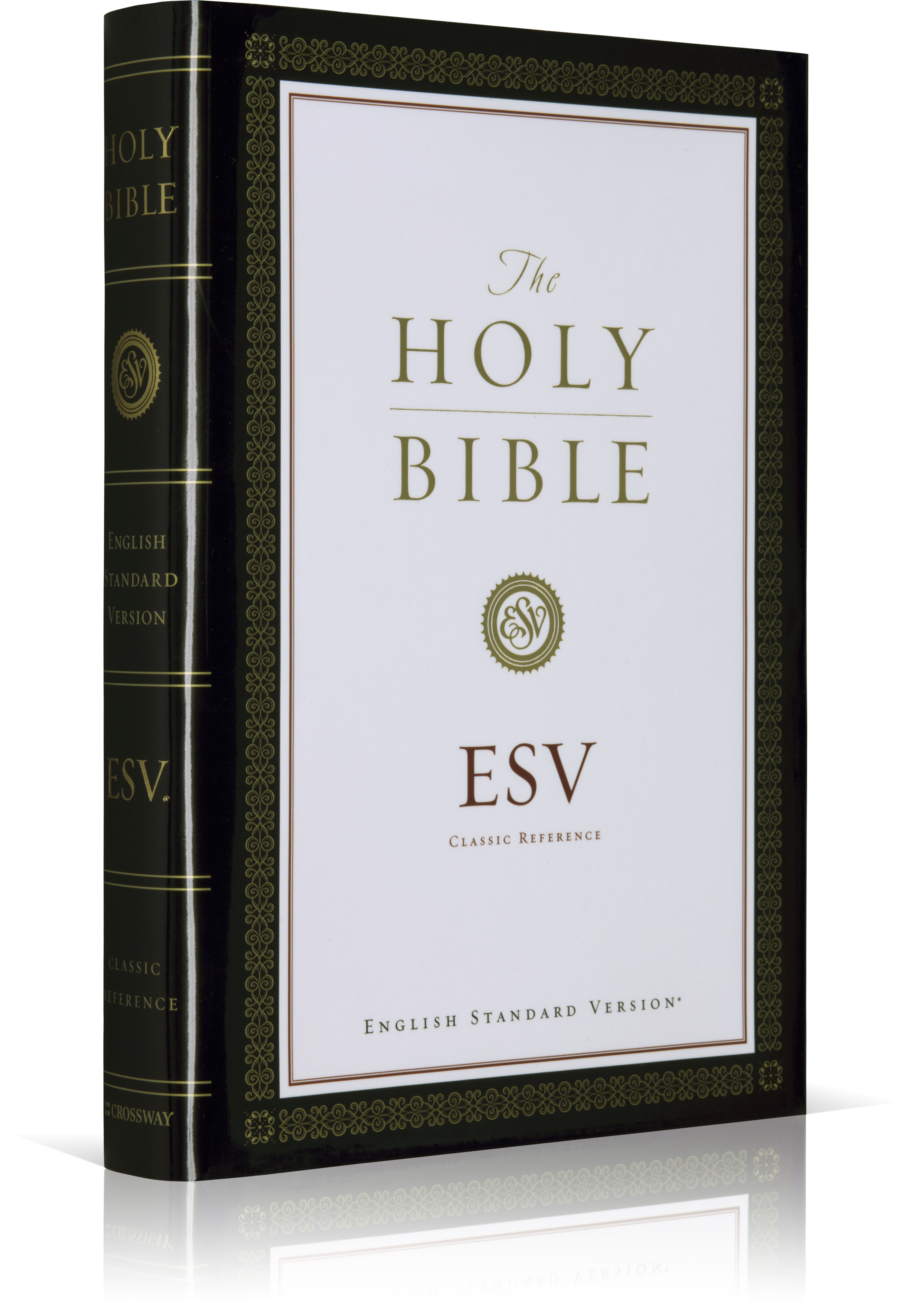
As a church Twynholm BC moved from the NIV to the ESV a few years ago. We have recently made a decision to move back. I'm delighted with the move, particularly this week.
Having preached on Matthew 1:1-17 on Sunday, I'm certainly glad that the NIV made the decision that not every "δε" needs to be translated by the word "and": a comma, or a full stop and capital letter are perfectly adequate and accurate.
The result is, that in 17 verses the NIV has 8 "and"s. The ESV has 42. Is that really necessary? I'm glad I didn't have to read the ESV publically last Sunday.
Here's an email I sent to a friend who asked me why we changed back.
I think we all recognise many of the strengths of the ESV. It is useful for as a bible study aid (rather like the use of an interlinear) for those who don't have biblical languages. It preserves connectives (even at the expense of good English), tries to use the same English word to translate the same oringinal language word where appropriate, etc. Has made some good choices in some places where the NIV has not done so well, (Eg propitiation over sacrifice of atonement etc.)
Anyway, that having been admitted, here are 9 problems with the ESV divided into 3 categories.
Please don't read the stuff below if you are considering buying the ESV's off us. Remember it's the extremely sound version, and I'll give you a good price...
Anyway, that having been admitted, here are 9 problems with the ESV divided into 3 categories.
Please don't read the stuff below if you are considering buying the ESV's off us. Remember it's the extremely sound version, and I'll give you a good price...
A. Philosophy of translation. the "Exclusion of Subtlety Version"
1) it seems to be based on the assumption that a 'word-for-word' translation is more 'accurate' than a 'sense-for-sense' translation. This seems an entirely wrongheaded assumption to me. Surely faithfulness in translation is that which best conveys the sense of of the original in the target language.
2) the word-for-word thing is shown up by how many of its proponents seem to write as if either they are ignorant of basic linguistics, or they assume their readers are ignorant, and try to pull the wool over their eyes. E.g. to suggest that "adelphos" MEANS "brother" and not "brother and sister" begs the question as to whether the semantic range of two words in different languages, times and cultures are ever identical.
3) It seems interesting that those who are themselves bilingual (such as Carson and Silva) and therefore always trying to translate from one lanuage they know well to another seem to favour dynamic equivalence.
4) the fact that it is based so heavily upon the RSV frustrated even some of the translators. So, I remember [one of the translators of the ESV] saying that where he'd say it was a close call, but on balance he'd prefer to depart from the RSV, "on balance" wasn't enough to go for what he would feel was a more accurate translation.
5) The decisions made on gender inclusivity seem not to understand the ways in which the English language has moved on.
Lots more on this area in Carson's "The limits of functional equivalence" in "the challenge of Bible Translation" (Incidentally, if you have my copy of that book, please let me know. I can't remember who I leant it to!)
B. Readability. the "Extremely Stilted Version"
1) Surely there would be a way even to have a more formally equivalent translation that wasn't quite so wooden, and incomprehensible.
What is gained in the literalism of Numbers 27:1 " 1Then drew near the daughters ofA)">(A) Zelophehad the son of Hepher" as opposed to "the daughters of Zelophehad approached"? and this isn't a one off example, it's a formalism that runs throughout.
2) Preservation of connectives may be quite useful at times in the development of an argument in Paul (though even then the pudding may become over-egged. But when every kai and de, and vav of a vav consecutive are translated "and" it becomes utterly ridiculous. There are more "ands" in Mark's gospel than verses! 1241 "ands" in the ESV compared with 693 in the NIV. For a fun exercise, turn to a random chapter of Mark's gospel and try and work out what would have been lost to the accuracy of sense if some of the "kai"s had been translated not with "and" but with "fullstop, capital letter." What would have been gained by the readability?
3) If readability isn't THE most important thing in our private devotions, (we can take time to read and re-read a sentence until we've understood the English) it is of vital importance in public reading. (If you didn't follow, it was too late). For us this has become the overwhelming factor as to why we are planning to abandon the ESV, particularly as about many of the congregation don't have English as a first language, and another large proportion left school at 16. I have two degrees, but even I don't read too well! Even if it was perfectly accurate, it wouldn't be much good if it is utterly incomprehensible - we might just as well read out the Greek and the Hebrew!
C. Marketing. The "exclusively sound version"?
1) With all the arguments and subtleties involved in bible translation, the way in which the ESV is being put forward by some as the only sound version for the discerning bible reader who really trusts that every word of the original is inspired, is frankly a little distasteful.
And verily, verily I say unto you, that, I have sufficient upon this subject said.
Mike
Tuesday, December 1, 2009
A pictorial representation of a Hebrew Cosmology

In my previous post I made the point that assuming that Genesis 1 is attempting to be "Scientifically accurate" just doesn't work. This is not just because of the chronology of Genesis 1, but, even more obviously, because of its topology. Today I came across this picture that makes the point well.
Subscribe to:
Posts (Atom)