Just started preaching on the Sermon on the Mount yesterday.
Sermon available here
Three great books to recommend to accompany the series
Small: Don Carson
Medium: John Stott
Large: Martyn Lloyd-Jones
If you come to our Sunday evening Services over the next couple of weeks there will be some copies of some of these books being given away for free for those who are quick a sticking their hand in the air at the appropriate moment!
Showing posts with label Preaching. Show all posts
Showing posts with label Preaching. Show all posts
Tuesday, January 11, 2011


Thursday, October 21, 2010
First two preachers' classes outlined
Here are the outlines of the first two preachers' classes. The first is pretty much 9Marks material.
Session 1: What is expository preaching
Session 1: What is expository preaching
- Introduction to the Class
- What is the format of the class?
- Reading a sermon from a well-known preacher
- Seminar
- Workshop
- Why have the class?
- What is preaching?
- Why is preaching so important?
- What’s missing from much preaching?
"An expositional sermon is a sermon in which the point of the Scriptural text is the point of the sermon applied to the life of the church today."
3. What expositional Preaching includes
Session 2: Why Expository Preaching?
Intro: The alternatives seem so appealing!
3. What expositional Preaching includes
- The Bible
- Books of the Bible
- The Whole Bible
- Testaments and Genres.
- Scope.
- The Bible’s Storyline
- The Gospel
- God
- Man
- Christ
- Response
- Seeing the Gospel through the lens of the text and the text through the lens of the gospel
- Systematic Theology
- Worldviews
- Evangelism
- The Preparation of the Saints
Session 2: Why Expository Preaching?
Intro: The alternatives seem so appealing!
- There are basic truths that need teaching
- Better to have Doctrinal sermons?
- May seem to “teach the whole counsel of God” more quickly and thoroughly
- There are obvious issues that need addressing
- Better to have Topical sermons?
- May seem more obviously relevant to people
- May seem to deal with issues in the church quicker
- The difference between food and medicine
- Expository preaching tends towards a balanced diet; doctrinal / topical preaching may have quicker effects, and is therefore sometimes useful, but provide a bad overall diet.
Five reasons to make expository preaching the main diet of a congregation.
A. Expository preaching preaches the whole bible- 2 Tim 3:16-17
- Acts 20:17-31
- Preachers are ignorant, God is omniscient
- Preachers are foolish, God is wise
- Preachers are sinful, God is perfect
- Preachers are under authority, the bible carries God’s authority
- Acts 17:10-12
- We read the bible
- To understand it
- To have it ask us questions as much as we ask it questions Job 38:1-3
- the testimony of church history
Thursday, October 14, 2010
Preaching class at Twynholm Baptist

Here's the outline of the course we are planning
Year 1
September | Expository Preaching I: What? |
October | Expository Preaching II: Why? |
November | Expository Preaching III: Imposters |
January | Sermon Preparation: Overview |
February | Sermon Preparation: Understanding the Text I |
March | Sermon Preparation: Understanding the Text II |
April | Sermon Preparation: Biblical Theology |
May | Sermon Preparation: Key Sentence |
June | Sermon Preparation: Outlines |
Year 2
September | Sermon Preparation: Explanation and style |
October | Sermon Preparation: Application I |
November | Sermon Preparation: Application II |
December | Sermon Preparation: Illustration |
January | Sermon Preparation: Introduction |
February | Sermon Preparation: Conclusion and Prayer |
March | Self Preparation: Prayer |
April | Self Preparation: Fear |
May | Sermon Delivery: Passion and Exhortation |
June | Sermon Delivery: Use of Notes |
Year 3
September | Sermon Delivery: Face, pace and space. |
October | Sermon Delivery: Ten ways to be boring. |
November | Sermons within the life of the congregation |
December | Preaching as a sinner standing in the place of God |
January | Planning an Expository Series |
February | Doctrinal Preaching |
March | Evangelistic Preaching |
April | Topical Preaching |
May | Conversational or Narrative Preaching? |
June | Concluding Reflections |
Make-up of each session
8pm | Reading An extract from a great sermon |
8:15 | Seminar |
9:00 | Workshop (One person presents short sermon or outline. We all give feedback) |
9:30 | Finish |
Wednesday, December 2, 2009
And I am glad and happy and comfortable to be reading and preaching from the NIV

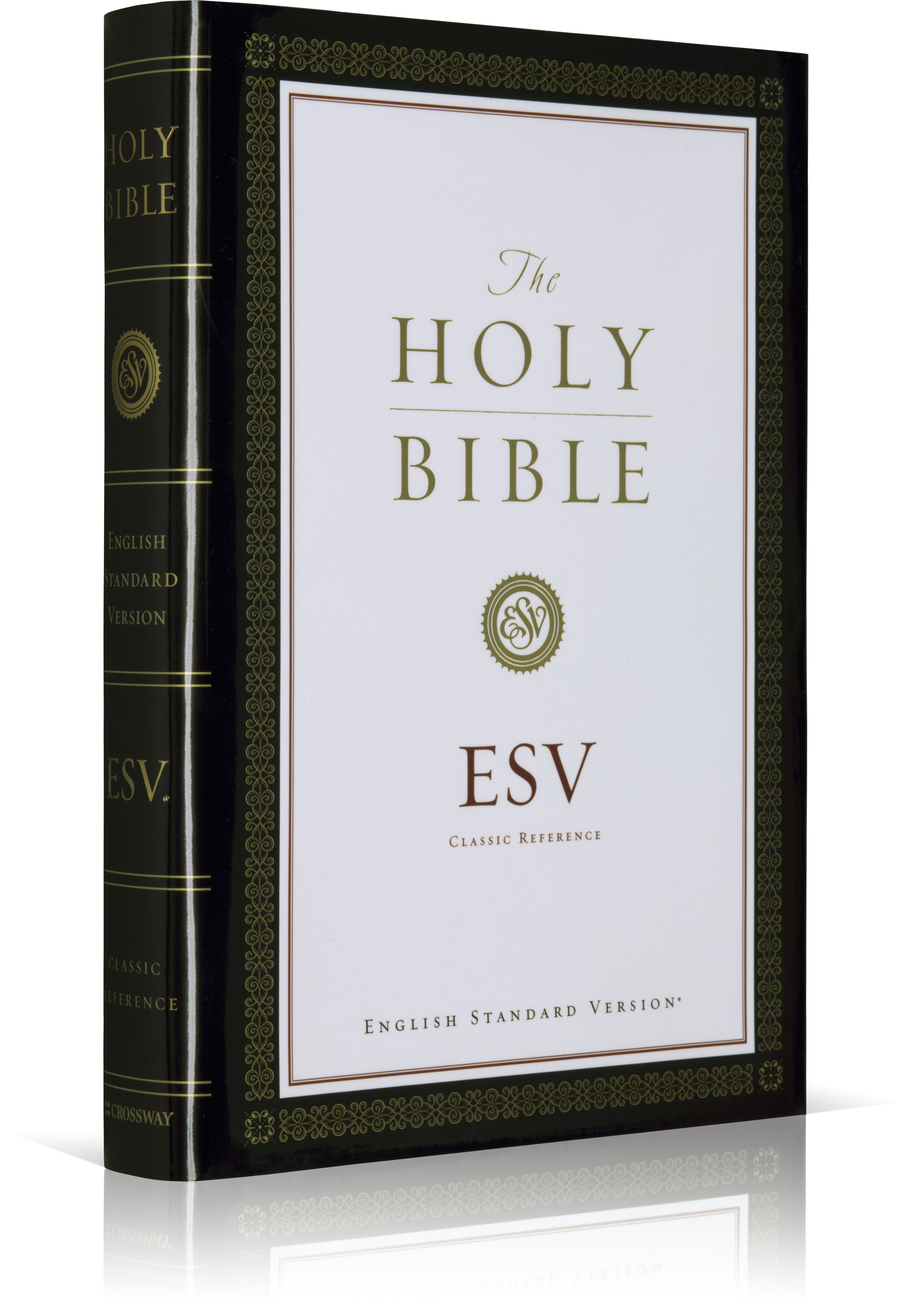
As a church Twynholm BC moved from the NIV to the ESV a few years ago. We have recently made a decision to move back. I'm delighted with the move, particularly this week.
Having preached on Matthew 1:1-17 on Sunday, I'm certainly glad that the NIV made the decision that not every "δε" needs to be translated by the word "and": a comma, or a full stop and capital letter are perfectly adequate and accurate.
The result is, that in 17 verses the NIV has 8 "and"s. The ESV has 42. Is that really necessary? I'm glad I didn't have to read the ESV publically last Sunday.
Here's an email I sent to a friend who asked me why we changed back.
I think we all recognise many of the strengths of the ESV. It is useful for as a bible study aid (rather like the use of an interlinear) for those who don't have biblical languages. It preserves connectives (even at the expense of good English), tries to use the same English word to translate the same oringinal language word where appropriate, etc. Has made some good choices in some places where the NIV has not done so well, (Eg propitiation over sacrifice of atonement etc.)
Anyway, that having been admitted, here are 9 problems with the ESV divided into 3 categories.
Please don't read the stuff below if you are considering buying the ESV's off us. Remember it's the extremely sound version, and I'll give you a good price...
Anyway, that having been admitted, here are 9 problems with the ESV divided into 3 categories.
Please don't read the stuff below if you are considering buying the ESV's off us. Remember it's the extremely sound version, and I'll give you a good price...
A. Philosophy of translation. the "Exclusion of Subtlety Version"
1) it seems to be based on the assumption that a 'word-for-word' translation is more 'accurate' than a 'sense-for-sense' translation. This seems an entirely wrongheaded assumption to me. Surely faithfulness in translation is that which best conveys the sense of of the original in the target language.
2) the word-for-word thing is shown up by how many of its proponents seem to write as if either they are ignorant of basic linguistics, or they assume their readers are ignorant, and try to pull the wool over their eyes. E.g. to suggest that "adelphos" MEANS "brother" and not "brother and sister" begs the question as to whether the semantic range of two words in different languages, times and cultures are ever identical.
3) It seems interesting that those who are themselves bilingual (such as Carson and Silva) and therefore always trying to translate from one lanuage they know well to another seem to favour dynamic equivalence.
4) the fact that it is based so heavily upon the RSV frustrated even some of the translators. So, I remember [one of the translators of the ESV] saying that where he'd say it was a close call, but on balance he'd prefer to depart from the RSV, "on balance" wasn't enough to go for what he would feel was a more accurate translation.
5) The decisions made on gender inclusivity seem not to understand the ways in which the English language has moved on.
Lots more on this area in Carson's "The limits of functional equivalence" in "the challenge of Bible Translation" (Incidentally, if you have my copy of that book, please let me know. I can't remember who I leant it to!)
B. Readability. the "Extremely Stilted Version"
1) Surely there would be a way even to have a more formally equivalent translation that wasn't quite so wooden, and incomprehensible.
What is gained in the literalism of Numbers 27:1 " 1Then drew near the daughters ofA)">(A) Zelophehad the son of Hepher" as opposed to "the daughters of Zelophehad approached"? and this isn't a one off example, it's a formalism that runs throughout.
2) Preservation of connectives may be quite useful at times in the development of an argument in Paul (though even then the pudding may become over-egged. But when every kai and de, and vav of a vav consecutive are translated "and" it becomes utterly ridiculous. There are more "ands" in Mark's gospel than verses! 1241 "ands" in the ESV compared with 693 in the NIV. For a fun exercise, turn to a random chapter of Mark's gospel and try and work out what would have been lost to the accuracy of sense if some of the "kai"s had been translated not with "and" but with "fullstop, capital letter." What would have been gained by the readability?
3) If readability isn't THE most important thing in our private devotions, (we can take time to read and re-read a sentence until we've understood the English) it is of vital importance in public reading. (If you didn't follow, it was too late). For us this has become the overwhelming factor as to why we are planning to abandon the ESV, particularly as about many of the congregation don't have English as a first language, and another large proportion left school at 16. I have two degrees, but even I don't read too well! Even if it was perfectly accurate, it wouldn't be much good if it is utterly incomprehensible - we might just as well read out the Greek and the Hebrew!
C. Marketing. The "exclusively sound version"?
1) With all the arguments and subtleties involved in bible translation, the way in which the ESV is being put forward by some as the only sound version for the discerning bible reader who really trusts that every word of the original is inspired, is frankly a little distasteful.
And verily, verily I say unto you, that, I have sufficient upon this subject said.
Mike
1) it seems to be based on the assumption that a 'word-for-word' translation is more 'accurate' than a 'sense-for-sense' translation. This seems an entirely wrongheaded assumption to me. Surely faithfulness in translation is that which best conveys the sense of of the original in the target language.
2) the word-for-word thing is shown up by how many of its proponents seem to write as if either they are ignorant of basic linguistics, or they assume their readers are ignorant, and try to pull the wool over their eyes. E.g. to suggest that "adelphos" MEANS "brother" and not "brother and sister" begs the question as to whether the semantic range of two words in different languages, times and cultures are ever identical.
3) It seems interesting that those who are themselves bilingual (such as Carson and Silva) and therefore always trying to translate from one lanuage they know well to another seem to favour dynamic equivalence.
4) the fact that it is based so heavily upon the RSV frustrated even some of the translators. So, I remember [one of the translators of the ESV] saying that where he'd say it was a close call, but on balance he'd prefer to depart from the RSV, "on balance" wasn't enough to go for what he would feel was a more accurate translation.
5) The decisions made on gender inclusivity seem not to understand the ways in which the English language has moved on.
Lots more on this area in Carson's "The limits of functional equivalence" in "the challenge of Bible Translation" (Incidentally, if you have my copy of that book, please let me know. I can't remember who I leant it to!)
B. Readability. the "Extremely Stilted Version"
1) Surely there would be a way even to have a more formally equivalent translation that wasn't quite so wooden, and incomprehensible.
What is gained in the literalism of Numbers 27:1 " 1Then drew near the daughters ofA)">(A) Zelophehad the son of Hepher" as opposed to "the daughters of Zelophehad approached"? and this isn't a one off example, it's a formalism that runs throughout.
2) Preservation of connectives may be quite useful at times in the development of an argument in Paul (though even then the pudding may become over-egged. But when every kai and de, and vav of a vav consecutive are translated "and" it becomes utterly ridiculous. There are more "ands" in Mark's gospel than verses! 1241 "ands" in the ESV compared with 693 in the NIV. For a fun exercise, turn to a random chapter of Mark's gospel and try and work out what would have been lost to the accuracy of sense if some of the "kai"s had been translated not with "and" but with "fullstop, capital letter." What would have been gained by the readability?
3) If readability isn't THE most important thing in our private devotions, (we can take time to read and re-read a sentence until we've understood the English) it is of vital importance in public reading. (If you didn't follow, it was too late). For us this has become the overwhelming factor as to why we are planning to abandon the ESV, particularly as about many of the congregation don't have English as a first language, and another large proportion left school at 16. I have two degrees, but even I don't read too well! Even if it was perfectly accurate, it wouldn't be much good if it is utterly incomprehensible - we might just as well read out the Greek and the Hebrew!
C. Marketing. The "exclusively sound version"?
1) With all the arguments and subtleties involved in bible translation, the way in which the ESV is being put forward by some as the only sound version for the discerning bible reader who really trusts that every word of the original is inspired, is frankly a little distasteful.
And verily, verily I say unto you, that, I have sufficient upon this subject said.
Mike
Thursday, November 19, 2009
Monday, October 19, 2009
The Millenium, and two friends: a Rookie Preacher and a Seminary Professor
 I've been preaching through Genesis 1-3 in the morning services here at Twynholm. Yesterday we arrived at Genesis 3:1-7. In the evening service we take a passage related to the morning passage. Marcos Peters, probably still inside his first 10 sermons, preached an excellent message on Revelation 20:3 (the one who deceived Eve is bound so that he might not deceive the nations).
Taking us through from Eden to Babel to the coming of the kingdom in Christ Marcos argued convincingly for an amillennial reading (though he did well not to use that term!) This was then applied in a way that was encouraging for us, just as it would have been encouraging for the initial readers. Things may look tough, but Christ has won his victory through the cross and resurrection; he is enthroned in heaven; Satan is bound; we can have confidence to preach the gospel, knowing that today Christ is in the business of bringing people from every nation to enlightenment and salvation.
 On the other side of the argument, my friend and dear brother Jim Hamilton has had a series of posts arguing for a premillennial reading. You can find them here, here, here, here and here. They are very coherent, and deserve serious thought.
One of the key arguments he uses is a comparison of Revelation 20:3 where Satan is bound so that he cannot deceive the nations with Revelation 13:14 where he deceives the inhabitants of the earth. Revelation 13 is clearly the church age, so Revelation 20 can't be, he argues.
Well, when it comes to the rookie preacher and the Professor of Biblical Theology, this time I'm with the Rookie!
Here's my reply to his last post:
Thanks Jim for these posts.
(Thanks also for your very helpful reflections on your first pastorate. This was very encouraging to me 18 months into life at Twynholm. Praying the Lord would make me more prayerful.)
As a fairly convinced amillennialist I’m interested in your comparison between the two texts, seeing deception in Revelation 12-13 and no deception in 20.
My own reading is that the deception of the nations is exactly what comes to an end with the finished work of Christ (not without exception, but without the Jew/Gentile distinction that existed before the coming of Christ).
Since Babel the nations have been deceived, and only through coming through Israel is there enlightenment in the Old Testament (focused on the temple in Jerusalem… I think someone’s written a good book about that!).
With the coming of Christ (and the Spirit) Babel is reversed (Acts 2) worship in delocalised (John 4) and repentance is granted to the Gentiles (Acts 10-11)
Jesus himself says that unless the strong man is bound, there can be no freedom.(Matt 12)
So I think that you are being a little harsh on the amillennialist. We don’t believe that Satan deceives nobody in the church age, but that the nations are not deceived as a whole. I’d suggest that we are paying very careful attention to the text, and particularly the force of the word “Nations”.
Jim then replied:
Mike, Thanks for your kind note and encouraging words.
On Rev 20, it looks to me like the kind of thing that Satan was doing in Rev 12-13 is stopped altogether.
Great to hear from you!
Jim
I replied to Jim:Thanks Jim,
Yes, you argue very well the case that all deception has stopped; if people are wanting to think the issue through and hear the premil position argued for well, these posts would be a great place to start. Revelation 20:3 is of course your best verse if you are going to be premil. I would argue though that it’s your best verse in the same way that 1 John 2:2 is the best verse for a general atonement. Looks like a slam dunk case on a first reading (or, as a Brit I ought to say a plumb LBW decision).
I’m just wondering though that, given the huge emphasis on the breaking down of the Jew/Gentile distinction in the New Testament, that you could not at least understand why an amil reader would see it entirely consistent to describe such a cataclysmic change in terms as radical as the chaining of Satan so that he would no longer deceive the nations?
Grace and peace,
Your brother,
Mike
Mike, I understand what you’re saying, but I think it’s wrong!
The reason is that Revelation 13:7 says this of Satan’s beast: “and authority was given it over every tribe and people and language and nation.”
So I think that when you read Rev 13, you see that Satan’s beast has Satan’s own authority (cf. 13:2) over the nations. Then in Rev 20 all that authority is stripped away from him.
Making that say the same thing is more than I’m interested in trying to do,
Jim
Monday, June 15, 2009
Conversation about sermon introductions

Over at the 9Marks Blog a few of us have been having a conversation about sermon introductions.
Deepak asked the question. I gave the "textbook" answer. Mike McKinley replied, questioning the usefulness of many introductions. I nuanced and Aaron Menikoff chipped in. Mike retorted. I'm planning to reply and link to this post in case anyone wants to read a brief (and not particularly clever) introduction.
So, here's the text of the introduction from Sunday's sermon on Jephthah... (Judges 10-12) I think I actually said something a little different to this, but this was the manuscript I took into the pulpit.
“Intelligence without ambition is a bird without wings.”
Salvador Dalí quotes (Spanish painter, 1904-1989)
The point he’s making is clear: whatever natural abilities we have, we will not make the most of them unless we have ambition: a desire to use that which has been given us to serve some end.
What is your ambition? What are you intent on achieving with you life?
Fame? I wonder how many people around the country are already rehearsing their skills in order to attempt to have half a chance of fame in next year’s Britain’s got talent.
Wealth? Oscar Wilde once said, “Every man of ambition has to fight his century with its own weapons. What this century worships is wealth. The God of this century is wealth. To succeed one must have wealth. At all costs one must have wealth.”
Other ambitions seem far more down to earth than seeking untold wealth or fame, and yet can be just as much of a driving force in our lives. Perhaps you feel your ambitions are much more reasonable, and less, well... ambitious.
· A stable family
· A successful career
· A peaceful life
· Living to meet one’s great grandchildren
· Having a child
· Holding down a job
· Getting out of debt.
· Kicking a bad habit.
· Owning you own home
Perhaps you ahve to admit that you’ve given up on ambition. Your hopes have passed you by, and now you are content to live one day at a time, but occasionally you wonder if your life had become directionless: you feel as if you are not longer living, but only existing.
Ambition becomes a driving force that motivates one to sacrifice a great deal in order to serve your ambition.
What are you ambitious for?
What sacrifices are you willing to make in order to realise that ambition?
It is an important question because our ambitions set the direction of our lives, as much as we are able.
And in setting our life’s direction, it reveals what we think the purpose of life is.
What do your ambitions say about your understanding of the purpose of life?
Judges 10-12 introduces a new character who is nothing if not ambitious...
Subscribe to:
Posts (Atom)